


Below you can download excerpts of our past reports. You can subscribe to receive the full report, respondent data and year-over-year trending. For more information on what we cover and how to sign up just fill out the contact form at the bottom of this page.
Click here to subscribe to our free newsletter: Hub Intel
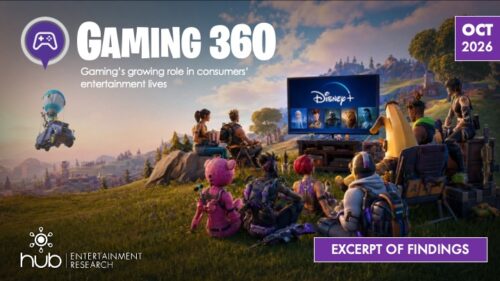
Gaming’s growing role in consumers’ entertainment lives
LEARN MOREThe convergence of gaming, movie and TV IP has continued to expand in 2026, as Hollywood studios embrace partnerships with gaming studios and the opportunities to expand gaming worlds across platforms shows no end. The Nintendo Switch 2 launched in early 2026 and quickly became the best-selling console in the US by a wide margin, hitting nearly 20M units sold by March. Premium tentpole franchise games (IP: Resident Evil, Call of Duty, Madden) continue to own market share, and the long-awaited launch of GTA 6 this fall is shaping up to drive huge numbers at premium prices. Alongside these game successes are the cross-platform expansion of game titles coming out in movie theaters later this year, including Resident Evil, Street Fighter and Mortal Kombat 2, all hoping to follow the Nintendo Super Marios Movie playbook ($1.3B box office).
Netflix and others have continued to invest in premium mobile games based on TV/film franchises, supporting multiplayer experiences across mobile, PC and console platforms. Netflix is also harnessing game play in new ways, with games like FIFA World Cup letting gamers play right on their TV sets using a smartphone as a controller. And AI (artificial intelligence) is making a huge impact on how games are being made, potentially enhancing gamer engagement but also opening many questions for how it will impact gamer experiences. Alongside these advances, advertising opportunities within games continue to expand, with producers like Electronic Arts offering brands the ability to advertise directly into games with custom content and stadium signs that naturally enhance the gamer experience.
This year’s Gaming 360 study will continue to explore key trends in gaming platforms and behavior, revealing key changes since this study began more than 5 years ago. Results from this study will inform key business opportunities for studios, developers and advertisers, as gaming popularity continues to drive entertainment.
Source: Interviews with 2,552 U.S. consumers 16-74
Click here to subscribe to our free newsletter: Hub Intel
Get a Free Excerpt
Where do viewers tune in first when they want to watch TV?
LEARN MOREHub’s annual Decoding the Default study once again tracks the services and devices that viewers turn to first when they’re ready to watch video content.
The media landscape is more unsettled since last year’s wave. Most recently, Comcast announced plans to spin off NBCUniversal, including Peacock, into its own publicly traded company, fully separating its media and streaming businesses from its core Xfinity broadband and wireless operations. That follows NBCUniversal’s earlier spin-off of its cable networks into the standalone Versant Media Group, while Warner Bros. Discovery’s planned breakup into separate streaming and linear businesses was overtaken by Paramount Skydance’s pending acquisition of the entire company. At the same time, Disney is moving toward a single Disney+ app that absorbs Hulu, and ESPN and Fox have each launched standalone direct-to-consumer sports apps that further splinter where fans go for live games. In parallel, the continued rise of FAST services such as Tubi, Pluto TV and The Roku Channel is redefining value propositions for viewers who are cost-conscious or overwhelmed by too many paid subscriptions.
In this increasingly complex environment, Decoding the Default continues to explore the first-stop behaviors that define the viewer’s journey. A viewer’s default platform is often their “home base” for viewing, significantly influencing frequency of use, depth of engagement, and subscription retention.
This year’s study helps content providers, streamers, and distributors understand what earns and sustains “default” status, including the growing role that smarter search and recommendations play in winning the first click. The result is a strategic lens into which platforms are gaining share of mind, and which risk being deprioritized in a market that is constantly in motion.
Source: Interviews with 1,600 U.S. TV viewers with broadband access age 16-74
Click here to subscribe to our free newsletter: Hub Intel
Get a Free Excerpt
The evolution of sports fans and sports media
LEARN MORE
Evolution of Sports: What’s the Score? is Hub’s semi-annual deep dive into how sports fans have adjusted to the ever-evolving landscape of professional sports.
Cross-promotions between entertainment-style documentaries and sporting events have helped some sports tap into new fan bases, while the number of services now offering access to live sports has opened opportunities for smaller, emerging leagues to grow. Social media continues to provide fans with unprecedented access to athletes, commentators, and other influencers, and has enabled fans to communicate directly with each other.
As we move into Wave 6, What’s the Score? captures how fans are reacting and adapting to these changes. More specifically, What’s the Score? examines how fans engage cross-promotional sports content. How interested are fans in watching minor or emerging sports on TV, now that there may be opportunity to do so? What else are fans doing while they watch live sports – and more specifically, how are they using social media while they watch?
In additional to these timely topics, in Wave 6, we also explore:
What’s the Score? helps anyone who creates, distributes, or advertises sports content better understand how much sports matter to fans, and what drives their engagement.
Source: Interviews with 3,814 U.S. Sports Fans with broadband access age 13-74
Click here to subscribe to our free newsletter: Hub Intel
Get a Free Excerpt
The New Television Gatekeepers. How TV Technology Shapes What We Find and Watch
LEARN MOREConnected TVs remain the most important and largest screen in the home, increasingly positioned to be “the brain” for not just watching TV and movies, but controlling other internet-connected devices in the home. Bigger and sharper TVs are now the norm for many consumers, thus shifting attention to what these TV sets can deliver “under the hood”: the best in premium and free streaming apps, music and podcast options, and additional features that improve daily home activities, comfort, decor and security. As AI (artificial intelligence) enhancements are being incorporated into phones and PCs, TV sets are next line to adopt and deliver improvements to the home environment that will delight consumers in new ways. The TV operating systems that power these sets, and the TV interfaces that deliver app-based control of all aspects of the home, continue to increase in importance.
Since 2019, The Evolution of the TV set has tracked TV set usage and preferences, and how viewers navigate the broad range of TV features and functions related to finding and consuming content. This study will continue to inform stakeholders across the “TV value chain” (device manufacturers, content producers, content distributors, and advertising sellers and buyers) on how to improve the consumer TV experience and optimize features that add the most value.
Source: Interviews with 2,500 U.S. consumers 16-74
Click here to subscribe to our free newsletter: Hub Intel
Get a Free Excerpt
Which distribution models do consumers value most, and how do they prefer to pay?
LEARN MORENearly every major streaming service has raised its prices over the past 18 months, some multiple times. The most expensive plans are well over $20/month, and even the cheaper ad-supported tiers are no longer the deals they used to be. With streaming price increases far outpacing inflation, many households are now spending well above what they want to on streaming services. What’s the threshold for consumers in tolerating what’s worth paying for, and which services will get downgraded or cancelled?
Since 2018, Hub Research’s How to Monetize Video study has tracked how consumers navigate how they pay for TV services – how much consumers currently pay (and are willing to pay) for TV services, and which features offer the best value.
As users (especially younger users) are filling their time with more free video services (e.g. Tubi), including social and creator video (on YouTube, TikTok, etc.), the pressure for premium paid streaming services to stand out has only increased. Newly introduced sports streaming services are helping to attract and keep subscribers, but the fragmentation of sports content challenges subscriber loyalty. Impending industry consolidation (Hulu into Disney+, Paramount buying WBD) has positioned streamers to offer more attractively priced bundles and pricing, but the question still remains: how many services, and which ones, are enough?
Study findings will illuminate how consumers prioritize which TV services have greater perceived value compared to others.
Source: Interviews with 1,600 U.S. TV viewers with broadband access age 16-74
Click here to subscribe to our free newsletter: Hub Intel
Get a Free Excerpt
What is the future of ad-supported TV in a streaming world?
LEARN MOREAs ad-supported viewing becomes an increasingly central part of the TV ecosystem, the conversation is shifting from whether audiences will tolerate advertising to what kinds of advertising experiences they are willing to accept—and at what cost. Viewers today are making more explicit trade-offs between price, ad load, relevance, and privacy as they navigate a growing mix of ad-supported options.
Previous waves of TV Advertising: Facts vs. Fiction have shown that consumers are broadly open to advertising on TV, particularly when it delivers clear value in the form of lower prices or greater access to content. In Wave 11, we build on this foundation by examining the limits of that openness: where ad load becomes unacceptable, how viewers evaluate concrete price-ad trade-offs, and how perceptions of relevance and intrusiveness shape the overall ad experience.
This wave also places TV advertising in a broader context. As consumers encounter ads across social platforms, websites, mobile games, search results, and emerging AI chat platforms, we explore how TV compares, whether it is seen as a safer, less intrusive space for advertising, and how the unique context of TV viewing influences tolerance and trust.
Finally, Wave 11 takes a closer look at targeting and execution. We examine when targeted advertising enhances the TV experience versus when it raises privacy concerns, and how audiences feel about the use of AI to improve ad relevance behind the scenes. We also explore ad formats and mechanics, and testing i.e., which approaches enhance or take away from the viewing experience.
The goal of Wave 11 is to help streaming services, advertisers, and media partners better understand the boundaries of ad acceptance on TV, clarifying how price, ad load, relevance, and privacy interact to shape viewer satisfaction, retention, and long-term value.
Source: Interviews with 3,000 US TV Viewers age 16-74
Click here to subscribe to our free newsletter: Hub Intel
Get a Free Excerpt
How consumers prioritize and choose the right combination of TV services
LEARN MOREThe introduction of new bundled streaming packages over the past two years has pushed consumers toward a great “re-bundling” of services, delivering improved value and retention reminiscent of cable long ago. Traditional distributors like Spectrum and DirecTV offer attractive streaming bundles built on top of primary internet services. New sports streaming packages like ESPN and FoxOne are delivering sports fans new ways to follow favorite teams. Most recently, YouTube has re-configured their live entertainment, news and sports TV packages to deliver multiple options for streaming-first households. All of these options bring together a breadth of attractive entertainment at a $50-$75/month price point.
In addition to these new bundles, aggregators like Amazon and Roku have made it easier to bring together different free and paid SVODs in one place. Bundled plans combining top services like Disney+ and HBO Max have proven successful in combining top streaming brands in more affordable ways.
As viewers struggle to find desired content across so many services, Hub’s annual Best Bundle study will continue to identify how TV consumers prioritize different combinations of services and content to meet their viewing needs. How many total services are needed? What’s the right mix of free vs paid services, across both traditional and streaming? What kinds of programming do viewers value more than others in choosing services?
Source: Interviews with 1,600 U.S. TV viewers with broadband access age 16-74
Click here to subscribe to our free newsletter: Hub Intel
Get a Free Excerpt
How FAST services fit into the TV ecosystem, and how to leverage them
LEARN MOREFAST: FULL THROTTLE examines the rise of Free Ad-Supported Streaming Television (FAST) services and their role within the evolving TV ecosystem.
The study delivers a clear and actionable view of how FAST platforms fit into today’s TV landscape. It examines who’s watching FASTs, how viewers discover content, and what content and formats keep them engaged. It deep-dives into the perceived strengths and disadvantages of FAST services, as well as drivers and barriers of FAST usage.
Source: Interviews with 3,009 U.S. TV viewers with broadband access age 16-74
Click here to subscribe to our free newsletter: Hub Intel
Get a Free Excerpt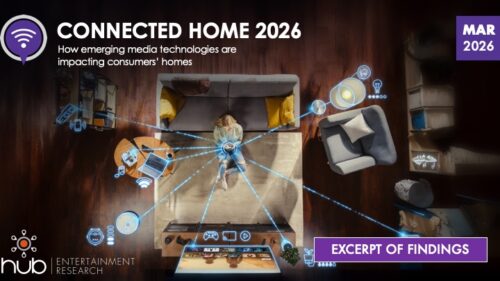
How emerging media technologies are impacting consumers’ homes
LEARN MORESince 2021, Hub’s “Connected Home” tracking study has delivered a comprehensive look at the technology and devices being used in US households, as well as intentions to buy new technology in the future. TV, PC and mobile manufacturers continue to innovate with better viewing and interactive features, leaning into AI tools to help streamline experiences across entertainment, productivity and home living. How much are consumers keeping track of these new innovations and how are they seeking ways to improve on the current home technologies in their lives?
2026 will continue to capture the devices and technology that consumers own, and which devices people are using to help find, manage and enjoy entertainment content across platforms and devices. We will look at new upgrades and devices announced at the recent Consumer Electronics Show to see what’s most likely to grab the attention of consumers in 2026.
Source: Interviews with 2,659 U.S. consumers 16-74
Click here to subscribe to our free newsletter: Hub Intel
Get a Free Excerpt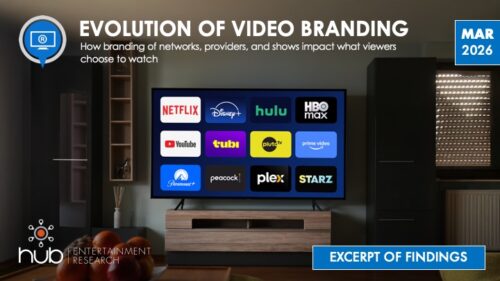
How branding of networks, providers, and shows impact what viewers choose to watch
LEARN MOREIn 2025, price sensitive consumers embraced YouTube and other free streaming services, as well as attractive bundles offering exclusive sports and premium content. Going into 2026, the wheels are in motion for further consolidation, as Warner Brothers aims to be acquired by Netflix, Comcast has spun out its cable channels to Versant, Hulu is being folded into Disney, and Paramount is aggressively looking to expand its reach with more acquisitions. These media conglomerates all have a similar goal: how can they elevate key brands and IP that make them “must-have” services for viewers?
For the past five years, Hub’s Evolution of Video Branding study has tracked consumer awareness and interest in different TV services, as well as the unique brand attributes that have the strongest impact on viewers’ desire to watch and pay for those services. Understanding what makes each brand uniquely valuable — whether it be exclusive or licensed content, live sports, affordable bundles, or other attributes — is core to attracting and keeping viewers.
2026’s study will continue to track these attributes that matter most, along with key trends from prior waves that illuminate how things have changed and may continue to shift in the year ahead.
Source: Interviews with 1,601 U.S. TV viewers with broadband access age 16-74
Click here to subscribe to our free newsletter: Hub Intel
Get a Free Excerpt
The evolution of sports fans and sports media
LEARN MOREThe past few years have seen streaming TV providers take full advantage of consumers’ growing appetite for on-demand sports viewing. What’s the Score? is Hub’s bi-annual deep dive into how sports fans have adjusted to this changing landscape and into the sports viewing options consumers value the most.
While fragmentation of sports leagues remains a challenge for viewers, since this time last year, the sports media landscape has made major shifts towards consolidation. Sports media giant ESPN now provides on-demand access to all live access to all ESPN channels, plus ESPN+, games, and betting. Both DIRECTV and Fox launched streaming sports bundles in 2025. Netflix’s exclusive deal with the WWE began in January, and Paramount + penned a 7-year exclusive deal with the UFC in August.
As we move into Wave 5, What’s the Score? will capture how fans are reacting and adapting to these changes. More specifically, What’s the Score? examines how fans engage with sports across different viewing platforms. How valuable is exclusive content to subscribers? Do fans continue to feel frustrated by fragmentation of sport events in some major sports leagues or are fans coming to see this as “par for the course?” Is it becoming more difficult to find and watch sports as more sports migrate to streaming?
Each wave also investigates important timely topics. In Wave 5, we’ll explore:
What’s the Score? helps anyone who creates, distributes, or advertises sports content better understand how much sports matter to fans, and what drives their engagement.
Source: Interviews with 3,773 U.S. Sports Fans with broadband access age 13-74
Get a Free Excerpt
The changing definition of “watching TV”
LEARN MOREAs popular creator content and YouTube viewing continues to impact viewing habits, Hub’s annual Video Redefined study will examine the role that non-premium and “social video” captures screen time alongside TV and movies. YouTube now regularly receives more than 10% of total TV viewing time (per Nielsen), and social video (on Instagram, TikTok and others) is consuming as much as a quarter of total daily viewing time. Video Redefined digs deep on how these “non-premium” viewing trends continue to capture attention and are valued as much (if not more) as traditional TV and movie formats.
Popular creator content includes categories of clips, microdramas (scripted dramas only a few minutes in length), and IP-driven fan content that leverage favorite characters, brands, games and franchises. Netflix recently inked a deal with Spotify to host video podcasts in 2026, reflecting efforts to expand ad reach with licensed non-premium content. Both Instagram Reels and TikTok are positioned to promote engagement on big screen TVs, like YouTube. Across platforms (TV, mobile, etc.) and content types, Video Redefined will identify the most popular types of non-premium content, how consumers react to advertising on those platforms, and how viewing this content may (or may not) be at the expense of other platforms. This study takes special consideration of younger viewers who are heavier consumers of this content, while also looking at how it is becoming mainstream across age groups.
Source: Interviews with 1,896 U.S. TV viewers with broadband access age 13-74
Click here to subscribe to our free newsletter: Hub Intel
Get a Free Excerpt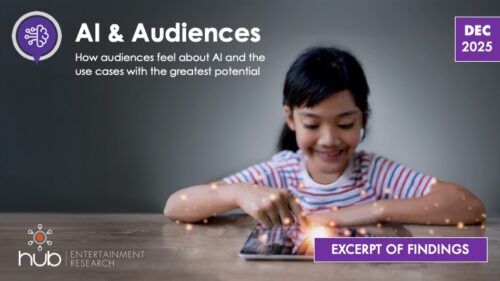
How audiences feel about AI and the use cases with the greatest potential
LEARN MOREIn an era when artificial intelligence is increasingly woven into creative pipelines, the question of how consumers feel about AI’s role in entertainment has moved from speculative to urgent.
The past year has seen generative models advance rapidly, with the ability to create much more realistic video. But they’ve also become more effective at things like storyboarding and editing, as well as consumer-facing tasks like making content easier to find.
The debate over ethical AI is growing, with issues like Hollywood strikes highlighting the clash between human creativity and automation. Recent disputes, such as those over AI actors and copyright use illustrate the rising stakes.
Studios, services, and creators must consider which AI applications consumers will accept, since increased efficiency is pointless if audiences end up rejecting the content. What is the balance between trust, engagement and creativity?
Source: Interviews with 2,500 U.S. consumers 16-74
Click here to subscribe to our free newsletter: Hub Intel
Get a Free Excerpt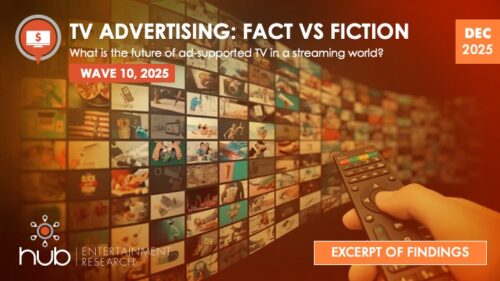
What is the future of ad-supported TV in a streaming world?
LEARN MOREOur TV Advertising: Facts vs. Fiction study has shown that consumers remain open to advertising, especially when it helps them save money, access more content, or feel their time is well spent. In Wave 10, we will focus on viewer attitudes, perceptions and experiences with tiered subscription services:
Source: Interviews with 3,000 US TV Viewers age 16-74
Click here to subscribe to our free newsletter: Hub Intel
Get a Free Excerpt